How to Get to Hakuba: Fastest, Cheapest and Easiest Transport Options
This post may contain affiliate links. If you purchase through one of these links, I may earn a small commission at no extra cost to you. I only recommend products and services I genuinely believe will help your trip.
If you’ve got your Hakuba holiday planned and are now wondering how to get there, you’ve come to the right place.
Navigating your way through Japan can seem a bit daunting at times, so here you’ll find easy-to-follow directions to get you to Hakuba. This guide covers everything you need to know about how to get to Hakuba, whether you’re travelling from Tokyo to Hakuba, or from Haneda or Narita Airport. We’ll show you the easiest, fastest and cheapest ways to travel, with step-by-step instructions
Travelling to Niseko instead? Check out our guide on Getting to Niseko
About Hakuba:
Hakuba is one of Japan’s best-known and most popular ski resorts. Rather than being a single resort, Hakuba is a valley made up of ten individual ski resorts, all located within close proximity to each other. These include Happo‑one, Hakuba 47, Goryu, Iwatake, Tsugaike, Jigatake, Kashimayari, Sanosaka, Cortina and Norikura. Check out our full write up about all ten resorts here.
Happo‑one is the most central and lively area, with the biggest village, the most restaurants and bars, and a great Après scene. It’s also home to the Happo Bus Terminal, which makes it a popular base for visitors.
Hakuba 47 and Goryu sit side by side and are connected on the mountain, making them a great option for skiers who want variety without moving accommodation. The village areas here are a little quieter than Happo.
Tsugaike, Cortina and Norikura are further up the valley and have a more traditional Japanese feel, with ski‑in ski‑out style accommodation and fewer crowds.
Check out my Hakuba Valley Ski Resorts Guide for more information on the 10 resorts.
Where is Hakuba:
Hakuba is located in Nagano Prefecture on Japan’s main island, Honshu. The closest major city is Nagano, and most people travel through Tokyo to get here. There are two major airports servicing Tokyo: Narita and Haneda. Both work as starting points for your Hakuba trip; however, Haneda is slightly closer to Tokyo, making it a slightly shorter trip – and often a cheaper one too.
Hakuba is located approximately 270km (168 miles) northwest of Tokyo. The most popular ways to travel are train and bus, with transfers from Tokyo easy to organise.
How to Get to Hakuba: Transport Options Compared:
Cheapest: Direct Bus
Fastest: Train + Bus
Easiest: Private Transfer
My Pick: Direct Bus
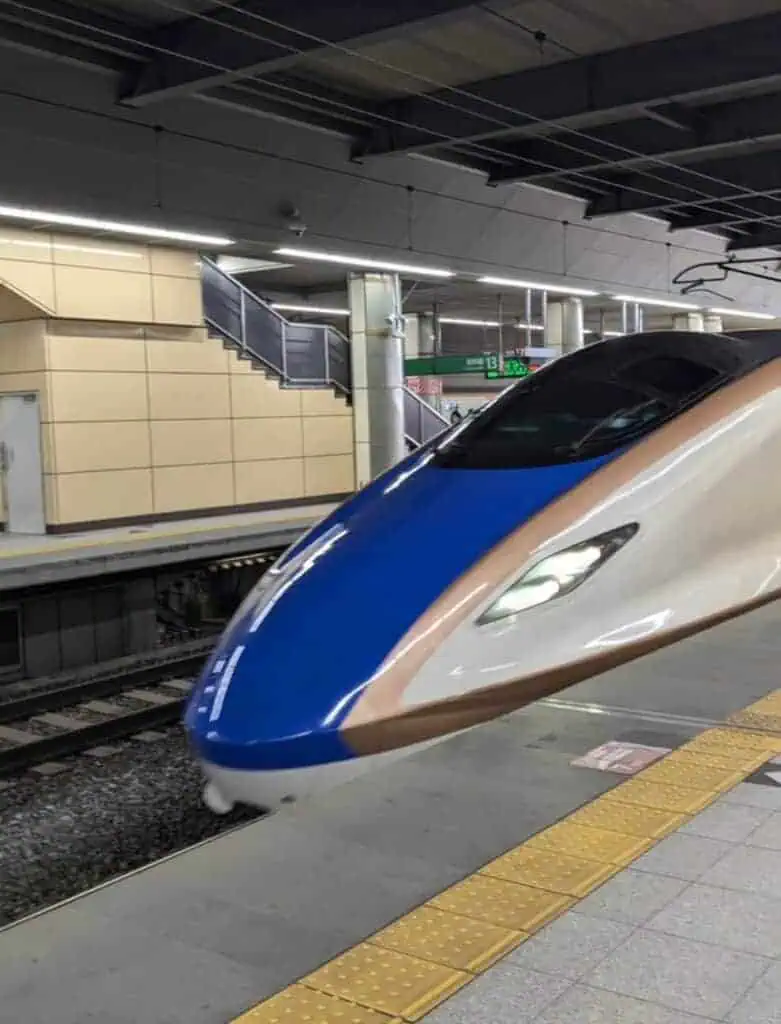
Train + Bus
Pick up points: Connect from any major JR train station
Cost: Tokyo to Hakuba approximately 11,500 yen ($109 AUD, $101 CAD & $73 USD)
Travel time: Tokyo to Hakuba between 3.5 – 4.5 hours, depending on connections
Where to book: Tickets can be purchased at the station or online via JR; I recommend booking in advance, particularly if you want a reserved seat or are travelling during peak winter periods.
Taking the train is one of the fastest ways to get to Hakuba, but it does involve at least one transfer. I’d opt for this if you’re travelling light, comfortable navigating large train stations like Tokyo or Shinjuku with luggage and looking to arrive quickly. The following steps outline how to travel from Tokyo to Happo‑one, as this is the most common arrival point in Hakuba. If you’re staying elsewhere in the valley, you can continue on a local bus or arrange a hotel pickup.
Pro Tip
This one’s controversial; however, I recommend using Apple Maps when looking at transport options in Japan (If you don’t have an iPhone, you can access it through Google). In my experience, Apple Maps does a better job of showing accurate local bus and train times – Google Maps often gets times wrong or leaves out certain services altogether. Also, be sure to be clear about your exact origin and destination, as things can get confusing pretty quickly if you don’t.
Tokyo to Happo‑one (via Nagano)
- Start at Tokyo Station and board the Hokuriku Shinkansen to Nagano Station. Trains run frequently throughout the day, the journey takes around 1 hour 30 minutes, and tickets cost approximately 8,000 yen for an unreserved seat.
- Once you arrive at Nagano Station, exit the Shinkansen gates and follow signs for the Hakuba bus platforms, which are located directly outside the station. Bus tickets can be purchased at Nagano Station.
- From Nagano, take the Alpico bus to Hakuba. Buses run regularly during winter and take around 1 hour 10 minutes to reach Happo-One Bus Terminal. Tickets cost approximately 3,500 yen.
- Arrive at Happo Bus Terminal. From here, many hotels offer free pickups, or you can connect to the local Hakuba shuttle buses to reach your accommodation.
Haneda & Narita to Hakuba
If you’re travelling directly from the airport, both Narita and Haneda have connecting train lines. Navigate your way to Tokyo Station and then follow the above steps. This will generally add between 30mins – 1.5 hours, depending on the airport. Tickets to Tokyo can be purchased at the airport.
Things to note
When travelling by train and bus, luggage space is limited. If you’ve got snowboard bags and large suitcases, be prepared to keep them with you, particularly during busy travel times. Navigating train stations within Tokyo can also be particularly difficult with a snowboard bag, so I highly recommend taking the bus or sending your luggage ahead if you’re not travelling light. Check out the FAQ at the end for more details on luggage forwarding.
Private Transfer
Pick up points: Anywhere in the Tokyo / Nagano region
Cost: Prices start from approximately 80,000 – 170,000 yen ($756 – $1,600 AUD, $700 – $1,495 CAD & $500 – $1,075 USD) from Tokyo (2 pax with luggage)
Travel time: Tokyo to Hakuba between 4 – 5 hours, depending on traffic and conditions
Where to book: Klook, Get Your Guide, Alpico, and local Hakuba transfer companies
Private transfers are a great, hassle‑free option for getting to Hakuba. These door‑to‑door services collect you from your hotel or airport and take you straight to your accommodation. With flexible pickup times and no transfers, this is easily the most comfortable way to travel – particularly if you’re arriving in a big group, with kids or a lot of luggage.
While the cost is high for couples or solo travellers, private transfers can offer good value for larger groups when the price is split. Many accommodation providers in Hakuba also work closely with transfer companies and may be able to organise this for you directly.
Direct Bus
Pick up points: Tokyo airports, Tokyo city, Nagano
Cost: One way Tokyo to Hakuba starting at 5,800 yen ($55 AUD, $51 CAD & $37 USD)
Narita to Hakuba starting at 13,000 yen ($123 AUD, $115 CAD & $83 USD)
Haneda to Hakuba starting at 9,300 yen ($88 AUD, $82 CAD, $59 USD)
Travel time: Tokyo to Hakuba approximately 5 – 6 hours
Where to book: Alpico, Nagano Snow Shuttle, Highway Buses
The cheapest way to get to Hakuba is by direct bus. During winter, multiple companies operate ski buses from Narita Airport, Haneda Airport, and Tokyo (Shinjuku). If you’re not looking for the wow factor of the Shinkansen Bullet train, this would be my recommendation. It’s a little longer than a private transfer or the train+bus combo, but requires no transfers and is generally pretty stress-free.
These buses do take longer than the train, with the average trip taking between 5 and 5.5 hours. I highly recommend booking in advance, particularly if you’re travelling during peak season or school holidays, as these will book out.
Several companies operate direct services, these include Alpico, Highway buses and Nagano Snow Shuttle.
Alpico run services from both airports as well as Tokyo. They have multiple departures a day and depart from Shinjuku with a range of drop-off locations in Hakuba. Trips start at 13,000 yen from Narita, 9,300 yen from Haneda and 6,400 yen from Tokyo.
Highway buses run services from Tokyo only, with several pick-up and drop-off locations, starting in Shinjuku. Trips start from 5,800 yen, making them the most affordable option.
Nagano Snow Shuttle run airport services, with buses from both Narita and Haneda airports. Some buses run express to Hakuba, with others having a stop off mid-way for various cultural experiences. Prices start at 11,500 yen from Haneda and 14,400 yen from Narita.
Most buses drop passengers at the Happo Bus Terminal. From there, you can connect to hotel shuttles or use the local Hakuba Valley shuttle buses.
A ticket generally includes one suitcase and one ski or snowboard bag, with additional space for carry‑on luggage.
Travelling from elsewhere in Japan
If you’re already exploring Japan, Hakuba is easy to add to your itinerary without flying. The Shinkansen network makes Nagano easily accessible from cities such as Kyoto, Osaka and Kanazawa, with a simple bus transfer into Hakuba once you arrive.
Total travel times vary depending on your starting point, but Hakuba is one of the most straightforward ski destinations in Japan to reach by public transport.
Car Rental
There is one final option which I haven’t touched on yet, and that is hiring a car. While this can be convenient if you’re planning to explore multiple resorts or surrounding towns, I’d caution against it unless you’re experienced at driving in snowy conditions.
Roads in the Hakuba Valley can be icy and snow‑covered for much of winter. Parking can also be limited, with many hotels and chalets offering minimal or no parking at all.
If you do decide to hire a car, make sure the rental agency is okay with you taking it to the snow, it’s fitted with proper winter tyres and also confirm parking arrangements with your accommodation in advance. For most visitors, public transport and hotel shuttles will do the job.
For more trip planning help, check out my Japan Ski Trip Packing List & guide on When to Travel to Japan for information on when you’ll get the best snow, smallest crowds or cheapest accommodation
Extra Resources for your Japan Ski Trip
This guide will show you how to get to Hakuba, but the resources below will help you organise everything else for your trip.
Stay Connected
Japan eSIM – Essential for navigation, translations, transport apps, and booking reservations on the go. I always use Airalo as I know I’ll be getting a reliable and affordable service
Currency
Japan uses the Yen. Most places take card, but it’s still worth carrying some cash for smaller operators.
Accommodation
Hotels & Lodges in Ski Resorts – Look for ski-in/ski-out options or places close to shuttle routes for convenience. Find accommodation through Booking.com, or local providers such as Hakuba Accommodation, Japan Ski Experience or The Hakuba Collection
Lift Passes, Tours & Experiences
Ski passes & snow activities – Booking in advance can save time and money; however, many accommodation providers offer discounted rates, so check with your hotel or accommodation provider.
Lessons – You’ll find lessons for all abilities and prices at Hakuba. Each resort has its own official Ski School, plus there are plenty of private options. However, it’s worth noting that Hakuba 47 is the only resort in the valley that gives lift priority to its official ski schools, which can make a significant difference to riding time if you’re there during peak season.
Non-ski activities – experiences like snowshoeing, cultural tours and tobogganing are easy to add on rest days. Check out Klook and Get Your Guide for lots of options, or check directly through the resort website.
Gear & Rentals
Ski & snowboard rentals – Convenient if you don’t want to travel with equipment. Rhythm Japan have stores at lots of resorts across Japan and offer a large range and great quality gear
Travel Essentials
Travel insurance that covers skiing – Look for comprehensive insurance with snow coverage. As an Australian, my favourites are 1 Cover for typical insurance, or if you have travel insurance already and just need snow cover, check out flip insurance for affordable, dedicated medical snow coverage. Whoever you go with, though, make sure to check the PDS to ensure they cover the type of riding you’re looking to do.
FAQ’s
For most travellers, the easiest option is booking a private transfer. It’s reliable in winter, will take you door-to-door, and you may even be able to include a grocery stop. If you’re travelling with kids or bulky luggage, this is often the least stressful route; however, unless you’re with a large group, it is also considerably more expensive than the alternatives – how much is convenience worth to you?
The fastest way is the Hokuriku Shinkansen from Tokyo Station to Nagano, followed by a direct bus or train to Hakuba. Total travel time is usually around 3.5 to 4 hours, depending on connections and snow conditions.
Highway buses from Tokyo are often the cheapest option, especially if booked in advance. While they take longer than the train, they can be good value for those on a budget and who don’t mind a longer journey.
Haneda Airport is generally more convenient as it’s closer to central Tokyo and reduces overall travel time. Narita works just as well, but expect a longer and slightly more expensive journey. However, ultimately, the extra time and expense are minimal when compared to a better flight.
Yes. Major stations like Tokyo and Nagano are well signposted in English, and transport staff are used to helping international travellers. Booking tickets in advance and following step-by-step directions makes the process much easier.
Hakuba is well set up for winter travel, but snow can slow things down during peak storms. Trains and buses still run reliably, though it’s a good idea to allow extra time and avoid very tight connections during heavy snowfall.
Yes, you can send ski bags and suitcases ahead and travel hands-free between cities – Yamato (Black Cat) offers an awesome, reliable service. Do check the delivery times, though, as some destinations will take a day or two to arrive. There are counters at both airports, and most hotels in Tokyo & Hakuba can coordinate pick-up and drop-offs.
Yes. Luggage forwarding is widely used in Japan year-round, including in ski towns. Just be sure to check how long the delivery time frames are and allow an extra day during peak winter periods or bad weather. Always keep some essentials with you in a carry-on just in case.
I would recommend organising all transfers in advance, particularly during peak ski season (with the exception of the Nagano to Hakuba link if you’re travelling via the train+bus combo). Shinkansen tickets, buses, and private transfers can sell out, particularly on weekends and during holidays. Booking ahead gives you more choice and peace of mind.